About bacteriostatic water (BAC water)
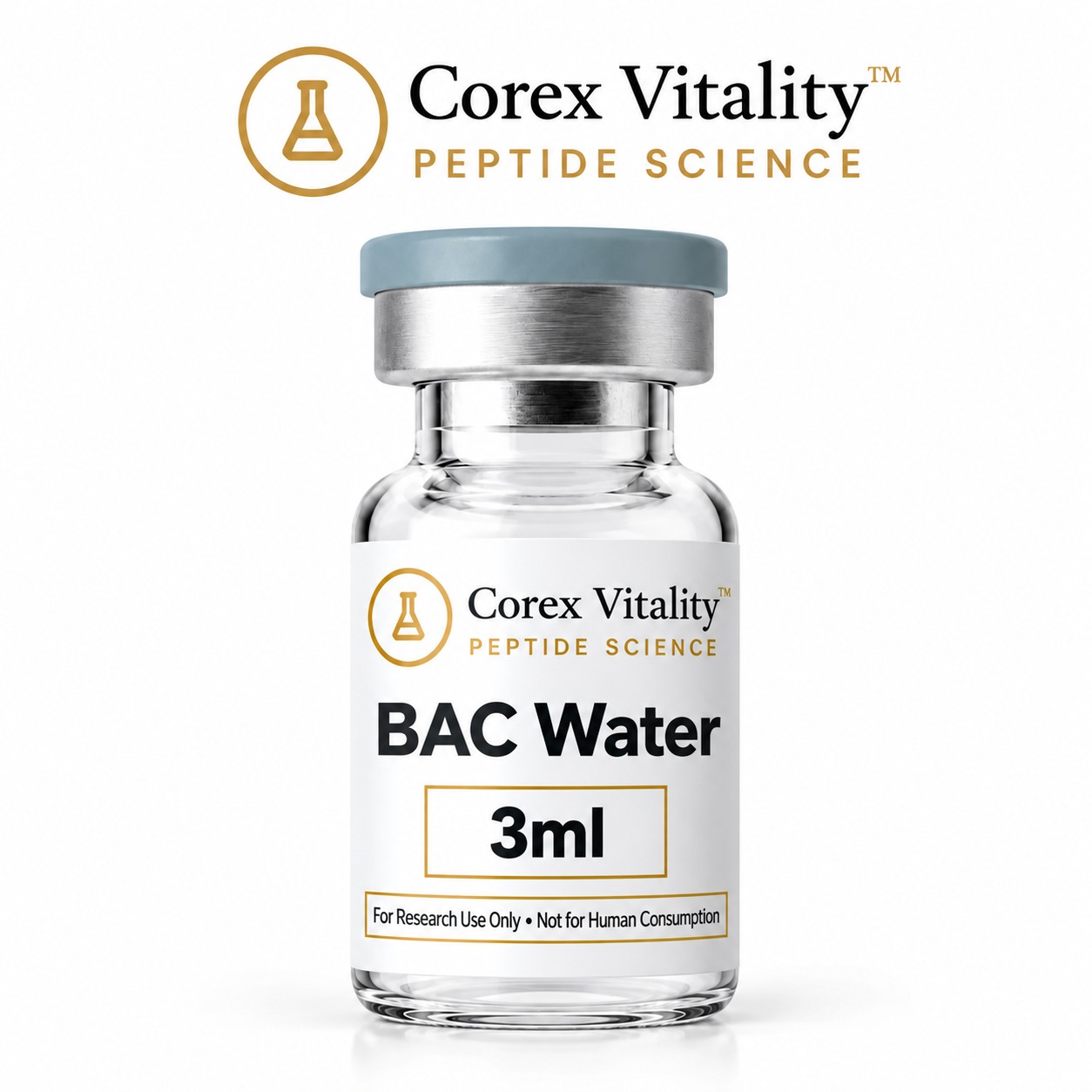
Bacteriostatic water (BAC water) is sterile water containing 0.9% benzyl alcohol as a preservative. It is supplied on this page as a laboratory diluent, in a sealed 3ml or 10ml vial.
The benzyl alcohol inhibits the growth of many bacteria, so the solution is not the same as sterile water with no preservative once the vial has been opened. Benzyl alcohol slows bacterial growth but does not sterilise. It is not suitable for every peptide and can interfere with cell assays. Where a preservative-free diluent is required, sterile water without benzyl alcohol should be used instead. Check compatibility with your materials and method before use.
For in-vitro laboratory research use only. Not for human or veterinary use.
Specifications
| Composition |
Sterile water with 0.9% benzyl alcohol as a preservative |
| Sizes |
3ml, 10ml |
| Preservative |
Benzyl alcohol (C7H8O, approx. 108.14 g/mol) |
| Format |
Sealed vial |
| Listed prices |
3ml £3.99 · 10ml £5.99 |
Bacteriostatic water and sterile water
|
Bacteriostatic water (BAC water) on this page |
Sterile water with no preservative |
| What’s in it |
Sterile water with 0.9% benzyl alcohol |
Sterile water only, no preservative |
| After opening |
The preservative inhibits the growth of many bacteria; it does not sterilise |
No preservative remains after opening |
| When it may not suit the work |
Not compatible with every peptide; can interfere with cell assays |
Use this where a preservative-free diluent is required |
Corex lists bacteriostatic water on this page. This table is an explanation only. It is not a second product listing.
Storage and handling
Storage & Handling — Corex Vitality™ research vials
- Store sealed vials at room temperature, away from light, unless the label says otherwise.
- After first use, keep the vial closed between withdrawals, use aseptic technique and follow the in-use period on the label; discard it if the solution becomes cloudy or discoloured.
- Benzyl alcohol slows bacterial growth but does not sterilise, is not suitable for every peptide and can interfere with cell assays — use sterile water or buffer where that matters.
- Handle only in a suitable laboratory setting, following your institution’s safety procedures. Keep out of reach of children.
For in-vitro laboratory research use only. Not for human or veterinary use. General guidance paraphrased from Bachem: Handling and Storage Guidelines for Peptides and Peptide Solubility.
Laboratory use
BAC water is used in laboratory settings where a preserved aqueous diluent is needed, for example to dissolve lyophilised research materials for in vitro work. For practical handling notes, see our peptide reconstitution and storage guide and the peptide calculator for concentration arithmetic. The calculator does not establish chemical compatibility, sterility or suitability for a particular experiment.
For in-vitro laboratory research use only. Not for human or veterinary use.
Research use only
For in-vitro laboratory research use only. Not for human or veterinary use. These products are research chemicals. They are not medicines, food, or supplements. They have not been evaluated by the MHRA, FDA, or any other regulatory body. Not intended to diagnose, treat, cure, or prevent any disease. All descriptions are for reference and research documentation purposes only. By purchasing, you confirm you are aged 18+ and using these products exclusively for in vitro laboratory research.
Bacteriostatic water (BAC water) FAQs
Is BAC water the same name as bacteriostatic water?
Yes. BAC water is the abbreviated name for bacteriostatic water on this listing. Check the product composition and label rather than relying on an abbreviation alone.
What is in Corex bacteriostatic water (BAC water)?
Each sealed vial contains sterile water with 0.9% benzyl alcohol as a preservative. It is listed in 3ml (£3.99) and 10ml (£5.99).
How does this differ from sterile water with no preservative?
The one added ingredient is 0.9% benzyl alcohol. That preservative inhibits the growth of many bacteria after the vial is opened, but it does not sterilise and it is not suitable for every peptide or cell assay.
Does the calculator establish solvent compatibility?
No. Concentration arithmetic does not establish chemical compatibility, sterility or suitability for a particular experiment.
How should an unopened vial be stored?
Store sealed vials at room temperature, away from light, unless the label says otherwise. After first use, follow the in-use period on the label and discard the solution if it becomes cloudy or discoloured.
Which size should a laboratory choose?
This page lists 3ml and 10ml. Choose the volume that suits the protocol. Both are the same composition.
For in-vitro laboratory research only. Not for human or veterinary use.
Related reading



Reviews
There are no reviews yet.