
Lab partners & testing
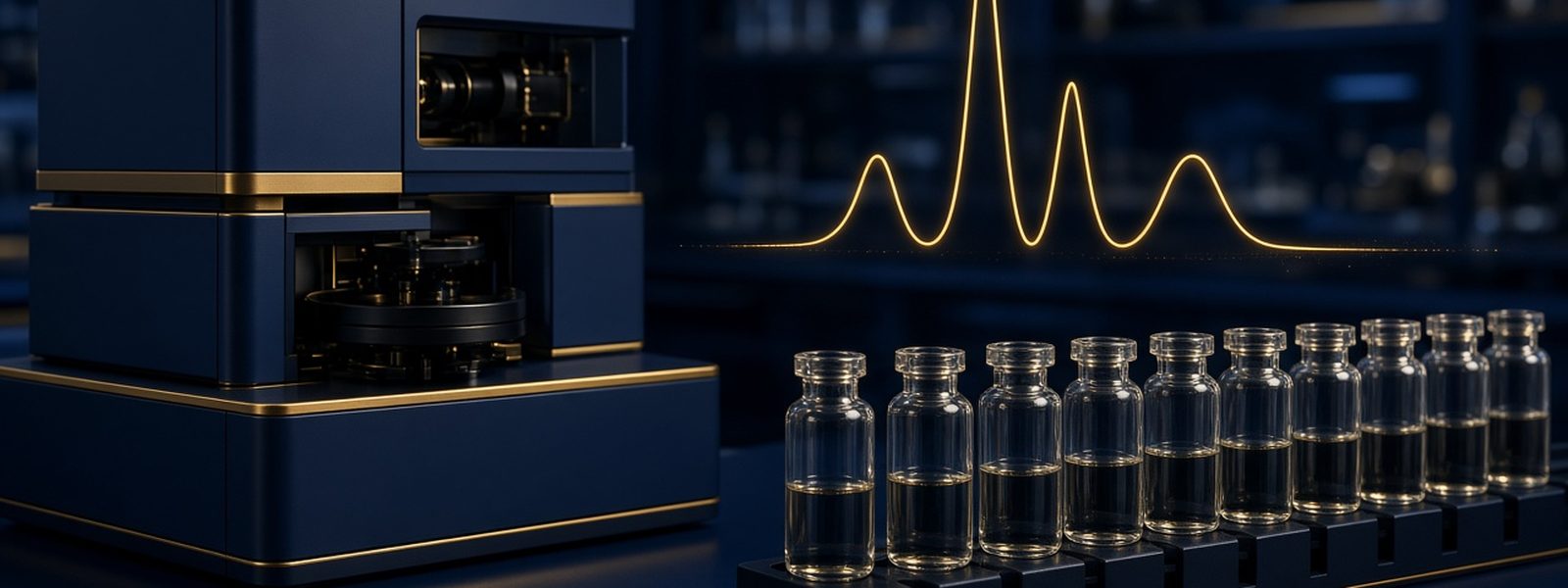
Our testing laboratories
Lingda Laboratory
- Website: https://lingdalab.com
- Location: sample intake in Gulfport, Mississippi, USA (as stated on the laboratory’s website)
- Certificates on our Verification page: most of our current certificates (46 of 48 at the time of writing)
- Report numbers: LDA22160842 to LDA22161292. Test dates 31 August to 3 September 2026.
- Tests shown on its certificates:
- Chromatographic purity and quantity: HPLC-UV/VIS
- Heavy metals: lead, cadmium, arsenic and mercury by ICP-MS (specification ≤10 ppm)
- Bacterial endotoxin: LAL assay (specification ≤0.50 EU/mg)
- Sterility: bacteria, fungi and yeast (specification: no microbial growth)
- Verify a report: each Lingda certificate has a report number and a “Proof of Authenticity” QR code. You can look up the report number at https://lingdalab.com/verify.
Bio-Analysis Centre
- Website: https://b-ac.co.uk
- Location: London BioScience Innovation Centre (LBIC), King’s Cross, London, UK
- Certificates on our Verification page: MOTS-c 10mg (“002 sample”)
- Tests shown on its certificate: HPLC purity at 215nm (98.8%) and LC-MS identity confirmation on a Shimadzu LCMS-8040, with the detected ions matched to the expected masses for MOTS-c
What the tests mean
| Test | What it measures | Method shown on COA |
|---|---|---|
| Purity | Percentage of the main compound relative to other detected components | HPLC with UV detection |
| Identity | Confirms the compound’s molecular mass matches the expected value | LC-MS (mass spectrometry) |
| Quantity / net content | Amount of compound in the vial (e.g. 56.32mg measured for a 50mg SS-31 vial) | HPLC-UV/VIS |
| Heavy metals | Lead, cadmium, arsenic, mercury in parts per million | ICP-MS |
| Endotoxin | Bacterial endotoxin, in endotoxin units per mg | LAL assay |
| Sterility | Absence of bacterial, fungal and yeast growth | Culture-based sterility test |
How to read a Certificate of Analysis
- Sample name and size. Check that they match the product and vial size you ordered.
- Report number and dates. Each certificate has a unique report number, a test date and an issue date.
- Laboratory. The name and address of the laboratory that carried out the testing.
- Chromatogram. The HPLC trace. A single dominant peak indicates high chromatographic purity. Smaller peaks are other components.
- Results versus specification. Each result is shown next to its acceptance limit (e.g. heavy metals ≤10 ppm).
- Conclusion and sign-off. Whether the sample met the specifications, with the names of the analyst, reviewer and approver.
Research use only. Certificates of Analysis describe analytical results for the tested sample. They are not a certification, approval or endorsement of any product. Corex Vitality™ products are supplied for laboratory research purposes only and are not intended for human or veterinary use, or for the diagnosis, treatment, prevention or cure of any disease or medical condition.
Reading a COA: How to read and verify a COA