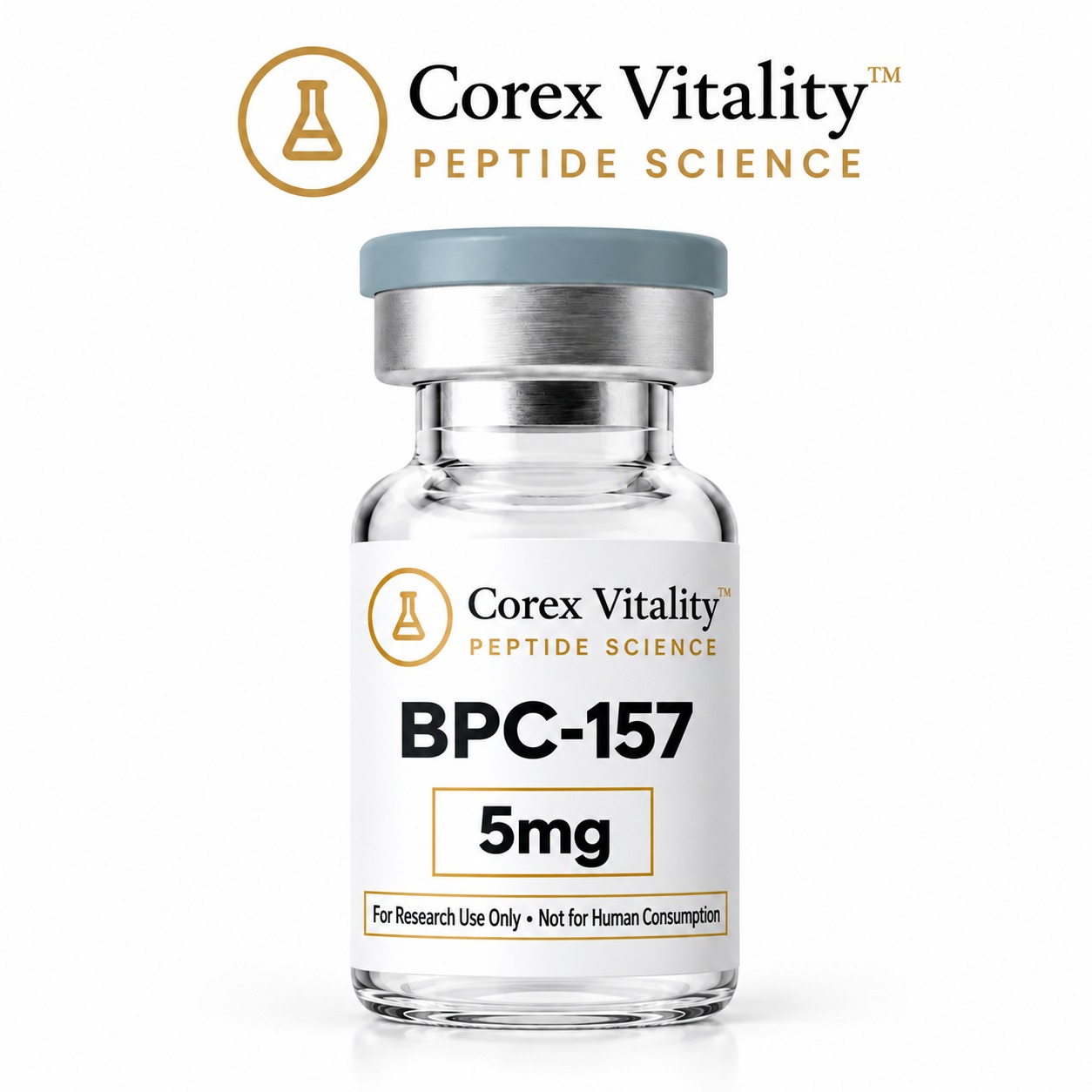
BPC-157 research peptide
Product at a glance
| Detail |
Information |
| Identity |
Synthetic pentadecapeptide: 15 amino acids |
| Sequence |
GEPPPGKPADDAGLV |
| Supplied form |
Lyophilised powder in a sealed vial |
| Listed size options |
2 mg, 5 mg, 10 mg and 20 mg |
| Price and stock |
See the size selector for current information |
| Batch documentation |
Check the relevant certificate before ordering |
Size options describe labelled material amounts, not application instructions. A listed size is not a guarantee that it is currently in stock.
Check the batch, not just the headline
Open our COA and verification page and compare the compound, batch identifier and certificate details with the material you are ordering. A COA records the tests performed on the submitted sample; its scope matters as much as its headline result.
The current product page identifies COAs for 5 mg batch LDA22162336 and 10 mg batch LDA22161152. It does not identify separate certificates for the 2 mg and 20 mg options. If your chosen option has no matching batch certificate, ask us to clarify the documentation before ordering. A certificate for another batch should not be read as a test result for yours.
HPLC purity is a chromatographic measurement. On its own it does not establish peptide content, sterility, endotoxin status or suitability for a particular experiment. Only rely on tests actually recorded in the certificate.
Research identity and evidence
BPC-157 is discussed in preclinical literature on cell signalling and peptide–cell interactions. Published experiments include cultured-cell and tissue-model work. The model, methods and analytical controls determine how each result should be interpreted; literature findings do not establish the performance of a supplied batch.
Use the Learning Hub to understand study types and analytical terminology. The existing BPC-157 research video offers a short introduction. Neither resource provides application instructions.
Laboratory storage and records
Follow the batch documentation and your institution’s approved handling procedures. Keep the container sealed, dry and protected from light; record the batch identifier and date received. Check the Learning Hub’s storage overview for general principles. This page does not provide preparation protocols or application quantities.
Frequently asked questions
What is BPC-157?
A synthetic peptide with 15 amino acids, also called a pentadecapeptide. The sequence is shown above so researchers can check the identity described.
Which sizes are listed?
2 mg, 5 mg, 10 mg and 20 mg. The selector is the source for current price and availability.
Does every size have its own certificate?
Not according to the current page. It identifies certificates for 5 mg and 10 mg batches. Check the certificate for the batch supplied; do not assume coverage of other batches or sizes.
Does an HPLC result mean the material is sterile?
No. HPLC purity and sterility are different measurements. A test is only evidenced when it appears in the batch documentation.
Where can I check delivery information?
Use the delivery information in checkout for your address and review the existing UK buying guide. Do not infer a dispatch promise from a search result or an old price table.
BPC-157 naming and batch questions
Are “BPC 157”, “BPC157” and “pentadecapeptide BPC 157” the same name?
Yes. They are spelling variants used for the same 15-amino-acid peptide, sequence GEPPPGKPADDAGLV, shown in the table above. The papers in our reference list use “BPC 157” and “pentadecapeptide BPC 157”. Always check the compound and sequence on the batch certificate, not only the name.
How do I match my vial to its certificate?
Note the batch identifier supplied with your order, then search for it on our verification page. This page currently identifies certificates for 5 mg batch LDA22162336 and 10 mg batch LDA22161152. If your batch identifier does not match a published certificate, contact us before relying on any result.
Why is BPC-157 supplied as a powder?
It is listed as lyophilised (freeze-dried) powder in a sealed vial. Dry peptide material keeps far better than material in solution, so keep the vial sealed, dry and protected from light, and record the batch identifier and date received. Our freeze-drying and storage guide explains the term.
For laboratory research use only. Not for human consumption.
Research use notice
For laboratory research use only, Not for human or veterinary use. Supplied as a research chemical, not as a medicine, food or supplement. Information is for research documentation and does not provide application instructions.
Research you can verify.
Related reading
References
- Sikiric P, et al. Brain-gut Axis and Pentadecapeptide BPC 157: Theoretical and Practical Implications. Curr Neuropharmacol. 2016. PubMed 27138887
- Seiwerth S, et al. BPC 157 and Standard Angiogenic Growth Factors. Gastrointestinal Tract Healing, Lessons from Tendon, Ligament, Muscle and Bone Healing. Curr Pharm Des. 2018. PubMed 29998800
- Chang CH, et al. The promoting effect of pentadecapeptide BPC 157 on tendon healing involves tendon outgrowth, cell survival, and cell migration. J Appl Physiol. 2011. PubMed 21030672
- Vasireddi N, et al. Emerging Use of BPC-157 in Orthopaedic Sports Medicine: A Systematic Review. HSS J. 2025. PubMed 40756949



Reviews
There are no reviews yet.