What is KLOW peptide?
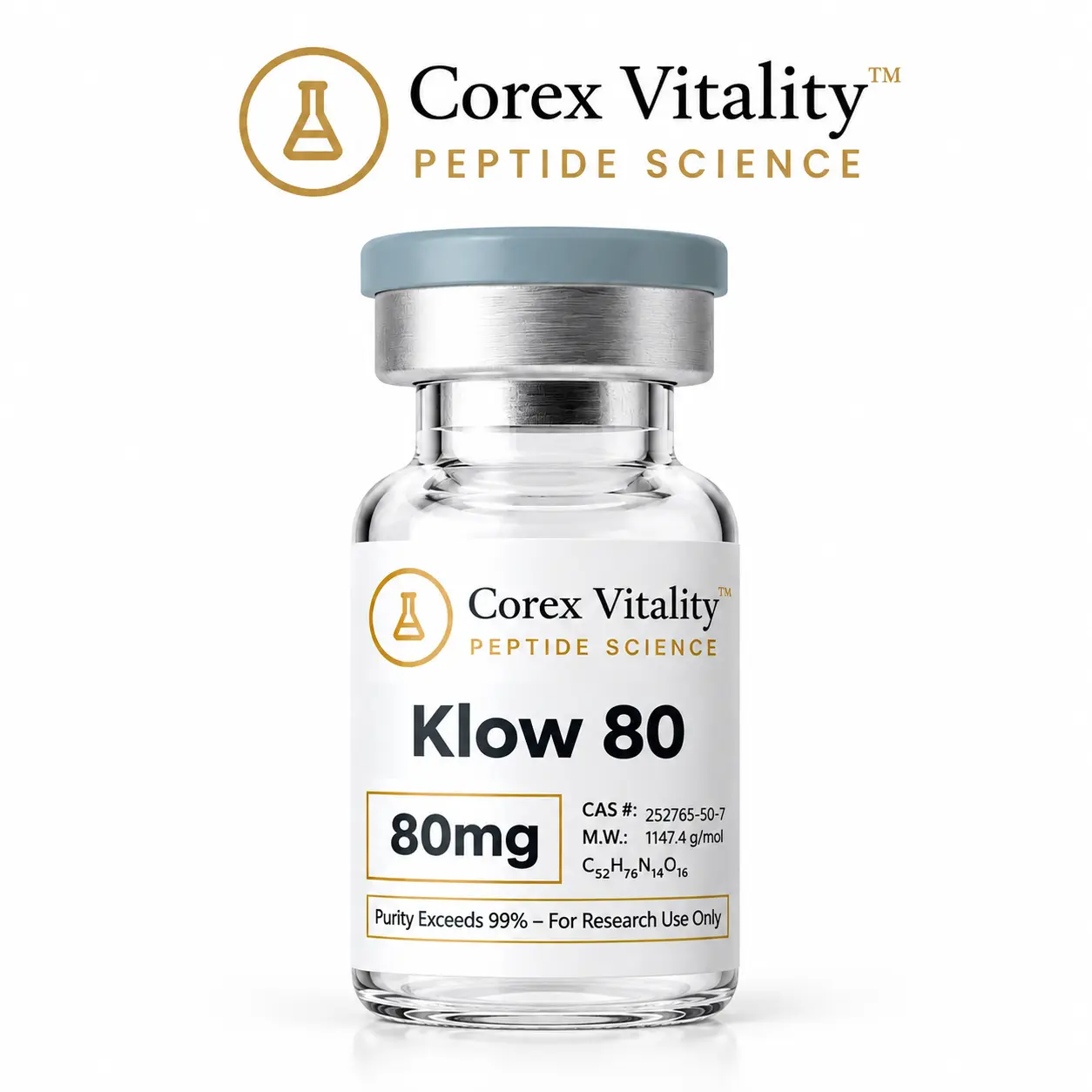
KLOW peptide is the name used here for the KLOW-80 research blend. It combines four components in fixed amounts in one 80mg vial, supplied as freeze-dried powder: GHK-Cu 50mg, BPC-157 10mg, TB-500 10mg and KPV 10mg.
For laboratory research use only. Not for human consumption.
What does the KLOW blend contain?
| Component |
Amount per vial |
Share of total |
| GHK-Cu |
50mg |
62.5% |
| BPC-157 |
10mg |
12.5% |
| TB-500 |
10mg |
12.5% |
| KPV |
10mg |
12.5% |
| Total |
80mg |
100% |
GHK-Cu is a copper complex of the tripeptide Gly-His-Lys. BPC-157 is a synthetic peptide with 15 amino acids. TB-500 is a synthetic research peptide. KPV is the tripeptide Lys-Pro-Val.
The product is supplied as freeze-dried powder in a sealed vial. Research on one component does not establish the properties of the combined blend.
Batch COA
The published KLOW-80 certificate is Lingda Laboratory report LDA22161252, listed on our verification page. The verification listing shows HPLC purity >99.72% ± 0.18% (test date 2026-09-03). On Lingda reports the Client is the manufacturer/supplier, not Corex Vitality™; we publish the file exactly as issued.
Match the batch / report number on the certificate with the vial label. Read the results and methods shown in that report. A COA describes the tested sample; it does not establish suitability for any purpose outside laboratory research. Do not treat the Client field as Corex Vitality™ unless the report (or the lab portal) names Corex Vitality™ or The Peptide Corex Limited.
Our testing guide, How to verify a peptide COA (UK) and Reading an HPLC chromatogram explain how to read a certificate.
Storage
Keep the dry vial tightly closed, protected from light and moisture. For longer storage, keep it at −20°C or colder. For short-term storage, keep it in a laboratory fridge at 2–8°C.
Before opening, allow the sealed vial to reach room temperature to reduce moisture on the powder. Follow the batch documentation and your laboratory’s safety procedures. Practical notes on reconstituting lyophilised material are in our peptide reconstitution and storage guide.
KLOW-80 pen format
The same four-component blend is also listed as a pre-filled KLOW-80 pen (80mg, £109.99) on the peptide pens page, filled fresh to order, sealed and boxed. A KLOW-80 Refill Pen is the pen only plus 6 new needles, with no hard case or box (£94.99). All formats are for in-vitro laboratory research only.
Further information
See the KLOW-80 video or visit the Learning Hub for further background. A literature summary of GHK-Cu and KLOW-80 composition is also on the GHK-Cu and Klow-80 research page.
For laboratory research use only. Not for human consumption.
KLOW peptide FAQs
What is KLOW peptide?
KLOW peptide refers here to KLOW-80, a four-component laboratory research blend supplied as 80mg of freeze-dried powder in a sealed vial. For laboratory research use only. Not for human consumption.
What is in the KLOW-80 blend?
Each vial contains GHK-Cu 50mg, BPC-157 10mg, TB-500 10mg and KPV 10mg. The total is 80mg. These are the amounts of material per vial, not instructions.
Where can I find the KLOW-80 batch COA?
Open Lingda Laboratory report LDA22161252 on our verification page and match its batch / report number to the vial label. On Lingda reports the Client is the manufacturer/supplier, not Corex Vitality™; we publish the file exactly as issued. Read the report for the results and methods for that sample.
How should KLOW-80 be stored?
Keep the sealed dry vial away from light and moisture. The current storage guidance is −20°C or colder for longer storage, or 2–8°C for short-term storage. Follow the batch documentation and laboratory procedures.
Does research on one component establish the properties of KLOW-80?
No. Findings about an individual component cannot automatically be applied to the combined blend. Keep component research separate from the product’s composition and batch test results.
Is KLOW-80 also listed as a pen?
Yes. The same 80mg four-component blend is listed as a pre-filled pen at £109.99 on the peptide pens page. A refill pen (pen plus 6 new needles, no hard case or box) is listed at £94.99.
For laboratory research use only. Not for human consumption.
Related reading



Reviews
There are no reviews yet.