About NAD+
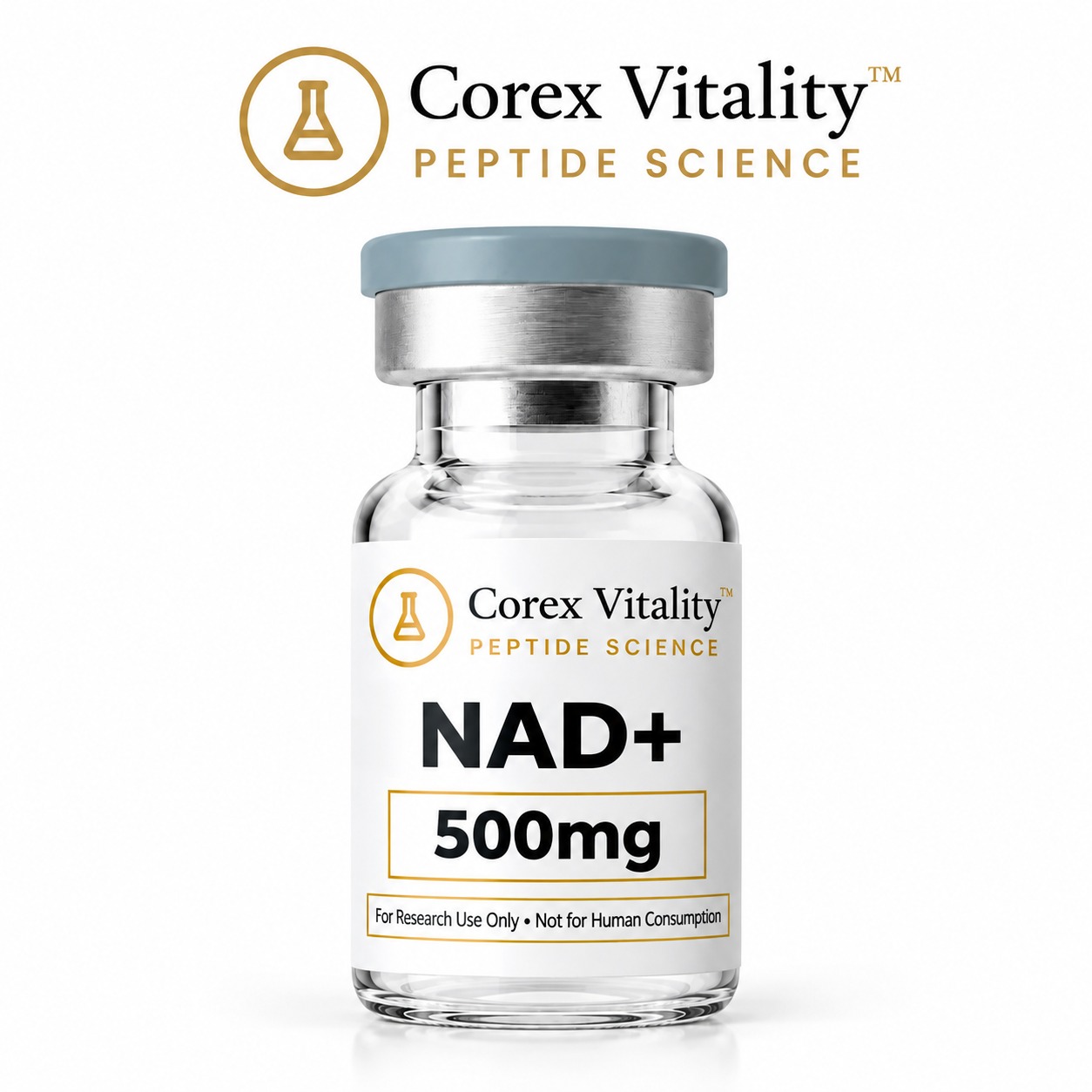
NAD+ (nicotinamide adenine dinucleotide, oxidised form) is a coenzyme found in all living cells. It carries electrons in reduction–oxidation (redox) reactions, and it is also a co-substrate for enzymes such as the sirtuins and poly(ADP-ribose) polymerases (PARPs) [1, 3]. It is a dinucleotide, not a peptide, with the molecular formula C21H27N7O14P2 and a molecular weight of approximately 663.4 g/mol.
The product sold here is a research chemical for laboratory use only. It is not a medicine, food or supplement.
Related research compounds: MOTS-c and SS-31, peptides studied in mitochondrial research. For more background, see our NAD+ ageing research summary and our Senolytics & Longevity research hub.
NAD+ pen and NAD+ 1000mg
NAD+ is a dinucleotide coenzyme, not a peptide. This page lists NAD+ research vials in 100mg, 500mg and 1000mg. The 1000mg vial is one of those sizes.
A NAD+ 1000mg pen kit (also searched as NAD+ pen or NAD pen) is listed on our peptide pens page. It is filled fresh to order from the source 1000mg batch. A NAD+ 1000mg Refill Pen is listed separately for laboratories that already have the kit.
For in-vitro laboratory research use only. Not for human or veterinary use.
Areas of research
NAD+ is one of the most widely studied molecules in cell biology. Published research includes:
- its roles as a redox coenzyme and as a co-substrate for sirtuins and PARPs, and changes in cellular NAD+ levels with age in model organisms [1]
- how NAD+ metabolism links the energy status of the cell with responses in mitochondria and the nucleus [2]
- its involvement in metabolic pathways, DNA repair, chromatin remodelling, cellular senescence and immune cell function [3]
- the biochemistry of NAD+ synthesis, consumption and recycling, and its homeostasis in cells and tissues [4]
These reviews summarise basic and preclinical research and are cited for scientific background only.
Product specifications
| Form |
Powder in a sealed vial |
| Sizes |
100mg, 500mg, 1000mg |
| Compound |
β-Nicotinamide adenine dinucleotide, oxidised form (NAD+) |
| Molecular formula |
C21H27N7O14P2 |
| Molecular weight |
approx. 663.4 g/mol |
| Purity |
COA shown is for the 1000mg batch. |
Storage and handling
Storage & Handling — Corex Vitality™ research vials
- Powder in a sealed vial (NAD+ is a dinucleotide, not a peptide). Keep sealed, dry, cold and away from light; follow the storage conditions on the label and COA.
- Let the vial reach room temperature before opening.
- Prepare solutions fresh.
- Handle only in a suitable laboratory setting, following your institution’s safety procedures. Keep out of reach of children.
For in-vitro laboratory research use only. Not for human or veterinary use. Bachem’s peptide guidance does not cover NAD+; general handling points paraphrased from Bachem: Handling and Storage Guidelines for Peptides and Peptide Solubility.
Quality and testing
NAD+ batches we sell have a published third-party HPLC Certificate of Analysis. On Lingda reports the Client is the manufacturer/supplier; we publish the file exactly as issued. The COA shown is for the 1000mg batch; no separate COA has been issued for the 100mg or 500mg sizes. You can also browse every published certificate on our COA and verification page.
NAD+ FAQ
Is NAD+ a peptide?
No. NAD+ is a dinucleotide coenzyme made from two linked nucleotide units. A peptide is a chain of amino acids, so NAD+ belongs to a different chemical group.
Research use only
For in-vitro laboratory research use only. Not for human or veterinary use. These products are research chemicals. They are not medicines, food, or supplements. They have not been evaluated by the MHRA, FDA, or any other regulatory body. Not intended to diagnose, treat, cure, or prevent any disease. All descriptions are for reference and research documentation purposes only. By purchasing, you confirm you are aged 18+ and using these products exclusively for in vitro laboratory research.
Related reading
References
- Verdin E. NAD+ in aging, metabolism, and neurodegeneration. Science. 2015. PubMed 26785480
- Cantó C, et al. NAD+ metabolism and the control of energy homeostasis: a balancing act between mitochondria and the nucleus. Cell Metab. 2015. PubMed 26118927
- Covarrubias AJ, et al. NAD+ metabolism and its roles in cellular processes during ageing. Nat Rev Mol Cell Biol. 2021. PubMed 33353981
- Katsyuba E, et al. NAD+ homeostasis in health and disease. Nat Metab. 2020. PubMed 32694684



Reviews
There are no reviews yet.